
Referee Review
What should you focus on in this scene?
See the key points from a referee’s perspective
Show explanation
Referee Review
What should you focus on in this scene?
See the key points from a referee’s perspective
Show explanationHow the footage and Laws apply
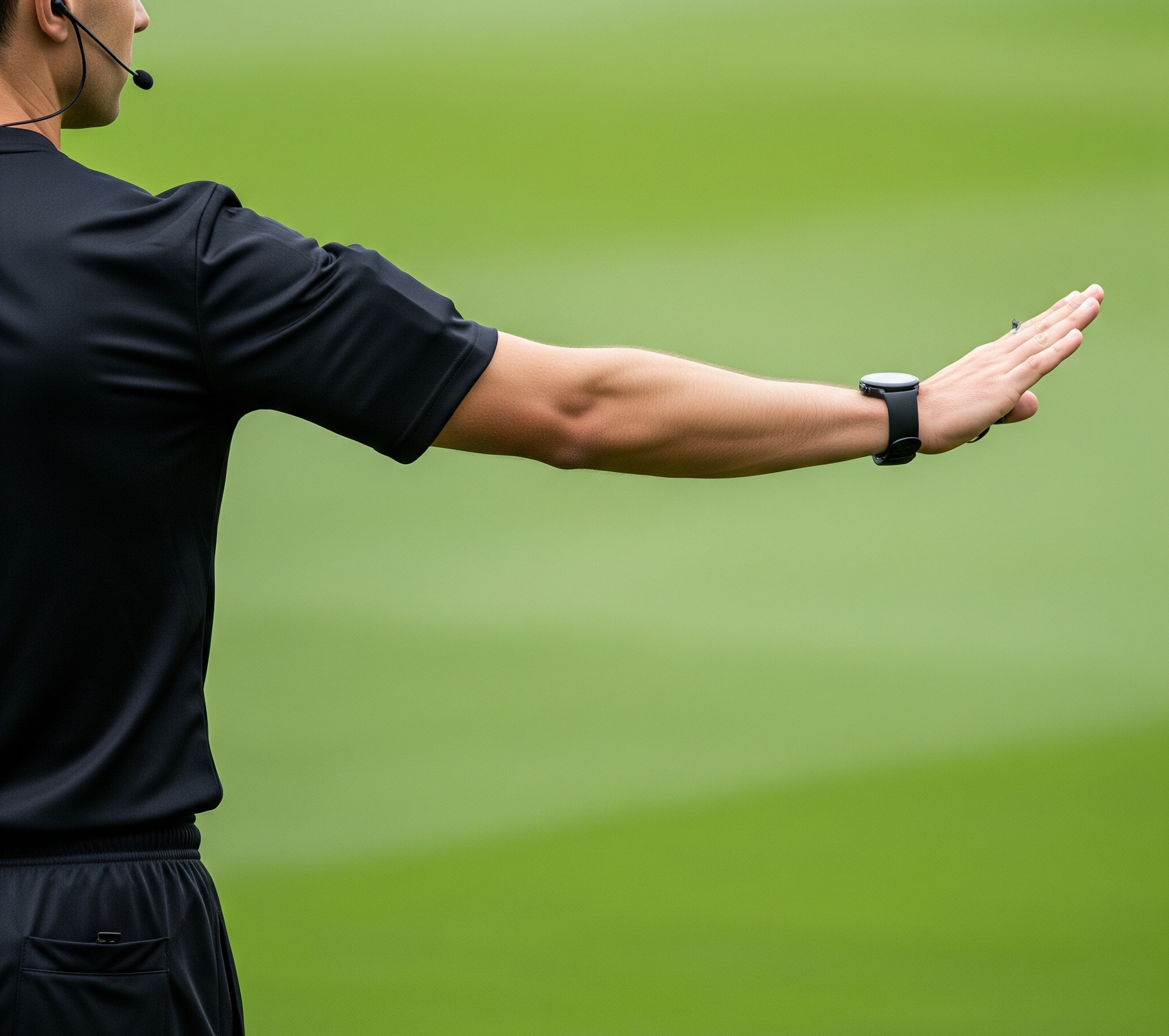
This scene is packed with excellent refereeing, from playing advantage to sharing information among the match officials and positioning afterwards. There are three main points to highlight. First is playing advantage based on an accurate reading of the situation. A Nittaidai Kashiwa player collected the loose ball that ran out to the flank from Ichiritsu Funabashi's corner kick and kicked it into space ahead, when a late tackle came in. Although it was a foul suffered deep in Nittaidai Kashiwa's own half, the referee appears to have anticipated that, having been pinned back by the corner kick, they could launch a counter-attack at pace, and therefore played advantage. As a result, it led to an attack in which Nittaidai Kashiwa created a chance in front of goal. Second is the referee's action immediately after playing advantage. The footage shows the referee pointing at the Ichiritsu Funabashi player who made the late tackle. This late tackle could later be subject to a caution (yellow card) as a reckless tackle, or it might call for a word of warning rather than a caution. With that follow-up action in mind, the referee appears to have pointed to confirm and share the identity of the player with the entire officiating team, including the assistant referee and the fourth official, ensuring nothing was overlooked. Third is maintaining a wide field of vision and good positioning as the counter-attack pushed forward. When Nittaidai Kashiwa's No. 8 picked up the loose ball on the left flank after the counter-attack had pushed upfield, it can be seen that the referee briefly glanced around to assess the surroundings. This is likely to check whether any players were coming up from behind or making runs in. Rather than focusing solely on the ball in front of them, the referee maintained a wide field of vision to track the movements of players from both teams and checked their positioning so as not to get in the players' way, which is excellent. Even when a cross was eventually delivered from the right flank, the referee held an appropriate position to judge the play. This was an excellent piece of refereeing and a valuable example for match officials.
Fair challenge or foul? Watch the clip and check the reasoning.
Check the line between careless, reckless and excessive force on video, then try a related quiz.
Watch foul clips in the appRelated Scenes

[Advantage] A difficult advantage decision near the halfway line leading to a goal on the counter-attack | 2026/27 J2 League Matchweek 2 Fujieda MYFC vs Iwaki FC

[Advantage] A well-judged advantage after a foul deep in their own half leading to a goal | 2026/27 J2 League Matchweek 3 Jubilo Iwata vs Tokushima Vortis

[Advantage] Advantage allowing an attack to continue after a foul, leading to a goal | 2026/27 J2 League Matchweek 6 Montedio Yamagata vs Albirex Niigata
Relevant Laws
Law 5 – The Referee (Advantage, Positioning) / Law 6 – The Other Match Officials / Law 12 – Fouls and Misconduct (Delayed disciplinary action)
Official references
Check the wording of the Laws
The links above lead to official IFAB and JFA resources. The application of the Laws to this incident is the author’s analysis and is not an official view of IFAB, JFA or the competition organiser.